

Rising for the fourth straight day, benchmark indices Sensex and Nifty settled marginally higher after a choppy session on Friday, tracking mixed global trends amid uncertainties on the geopolitical front. The BSE Sensex opened weak and declined 414.44 points to 55,049.95 in opening deals. But within minutes, it pared all its losses and jumped 369.56 points to 55,833.95. Facing volatility, the index finally settled at 55,550.30, higher by 85.91 points or 0.15 per cent.

Six Indian women have made it to Asia's most powerful women list released by Forbes.

The commission said its agents are more interested in making a quick buck by getting more policies for the company and they show scant regard to the interest of the policy holder.
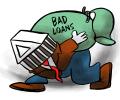
Public sector banks have lost nearly Rs 2.85 lakh crore on account of loan dues of 13 corporates even as the banks are used to bail out ailing financial institutions such as Yes Bank and IL&FS, United Forum of Bank Unions alleged on Monday. In a press release, UFBU's convener B Rambabu said the organisation calls for a two-day all India bank strike on December 16 and 17 protesting against Banking Laws (Amendment) Bill 2021 and opposing the Centre's alleged move to privatise PSBs. According to the statistics given by the UFBU, the 13 corporates' outstanding dues were at Rs 486,800 crore and it was resolved at Rs 161,820 crore resulting in a loss of Rs 284,980 crore.
Dairy major Amul, Life Insurance Corporation of India and mobile manufacturer Nokia have emerged as India's top three brands according to Asia's Top 1000 Brands

The TMC also announced it would hold talks with other regional parties in their bid to take on the BJP in the crucial 2024 elections but at the same time denied that it was planning a third front, separate from the Congress-led front.

Ulhas Joshi, Head -- Sales, Rank MF, a mutual fund investment platform, answers your queries.

The top-100 wealth creators generated Rs 49 lakh crore during 2014-19, the highest-ever quantum of wealth added, according to Motilal Oswal's Annual Wealth Creation Study 2019. According to the study, Reliance Industries, Indiabulls Ventures and IndusInd Bank are the biggest, fastest and most-consistent wealth creators, respectively. The number of PSUs in the top-100 wealth creators is only nine, namely IOC, BPCL, HPCL, Power Grid Corporation, Petronet LNG, Indraprastha Gas, LIC Housing, Bharat Electronics and NBCC.

The plan offers comprehensive hospitalisation benefits for the whole family of the principal insured. A unique feature of this plan is that it also offers to cover the parents in-law of the principal insured besides spouse, minor children and parents
The government is looking to sell shares of Reliance Industries (RIL) held through Specified Undertaking of the Unit Trust of India (SUUTI) and is soon going to appoint an intermediary to manage it. The plan is to sell about 8 lakh shares of RIL that will help the government garner around Rs 180 crore. The Department of Investment and Public Asset Management (DIPAM) will appoint an intermediary that will act as a custodian of these shares. The intermediary, based on its market analysis, will offload these shares at the best price, said an official. A final approval on the proposal is expected soon.

The solution for railways lay in understanding the strengths of the system,

Based on whether you choose the aviation, Bhopal or LIC numbers, and on the official death toll (in the absence of any other verifiable number), the value of human lives lost in the pandemic would range from Rs 16,500 crore to Rs 94,000 crore, explains T N Ninan.

Omkeshwar Singh, head, Rank MF, a mutual fund investment platform, answers your queries.

The 2022-23 Budget has projected a disinvestment target of Rs 65,000 crore for next financial year. This is significantly lower than the estimated Rs 1.75 lakh crore budgeted for 2021-22. In the revised estimates, the target for 2021-22 has been cut to Rs 78,000 crore.
By refocussing on equity-linked products, LIC has managed to turn in some splendid numbers.

Government is expected to rely more on divestment proceeds to keep the fiscal deficit in check

Omkeshwar Singh, Head, Rank MF, a mutual fund investment platform, answers your queries.

The right investment at the right age will help you enjoy a secured post retirement life.
Notional losses on insurer's PSU shopping spree at Rs 3,038 crore (Rs 30.38 billion) or 25 per cent of investment.
The LIC and some PSU general insurers are expected to maintain dominant position in the coming years even in the liberalised scenario, ICRA said in a research report.

Much of the tardy reaction to competition is the result of LIC's legacy.

Equities went into a tailspin on Wednesday after the Reserve Bank surprised the market with a mid-cycle rate hike in a bid to tame soaring inflation.

Nikunj Saraf, Vice President Choice Wealth, answers your queries.

Omkeshwar Singh, head, Rank MF, a mutual fund investment platform, answers your queries.

On the capital raising, where there are reports of the bank needing at least Rs 20,000 crore to spring back to normalcy, Yes Bank administrator Prashant Kumar declined to give an estimate of the requirement but said it would like for most of the fund raising to happen in the first round itself.

Bank strike continued for day-two on Tuesday, led by nine unions of public sector banks (PSBs) in the country, opposing government's policy to privatise the lenders. Customers will be inconvenienced to get services such as cash withdrawals, deposits, cheque clearances, remittance services. Government transactions related to treasury as well as business transactions will also be impacted. United Forum of Bank Unions (UFBU), an umbrella body of nine unions, had given a strike call for March 15 and 16.

After the finance minister directed public sector banks to join the account aggregator (AA) ecosystem, 5-6 major ones, including State Bank of India (SBI) and Bank of Baroda are expected to go live by July-end. Sahmati, an industry alliance for the AA ecosystem, has been working with PSU banks to get them onboarded for quite some time now. So far, Union Bank of India and Punjab National Bank (PNB) have gone live on the AA ecosystem. While Union Bank has been live for a while, PNB went live earlier this month.
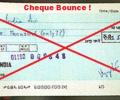
The finance ministry has proposed to decriminalise a host of minor offences, including those relating to cheque bounce and repayment of loans, in as many as 19 legislations to help businesses tide over the crisis caused by the coronavirus outbreak. The 19 legislations include Negotiable Instruments Act (cheque bounce), SARFAESI Act (repayment of bank loans), LIC Act, PFRDA Act, RBI Act, NHB Act, Banking Regulation Act and Chit Funds Act.

Though the number of Japanese foreign institutional investors in India is still negligible, it's significant that 8 of the 11 registered with Sebi entered in the past year and a half

The insurance regulator wants the removal of the minimum entry capital requirement of Rs 100 crore for setting up an insurance business in a bid to facilitate the entry of multiple players such as standalone micro insurers and niche players. Debasish Panda, chairman, Insurance Regulatory and Development Authority of India (Irdai), said it should be left to the regulator instead to decide what should be the entry fee for interested players, depending on the size of the business and operations. According to the current norms, insurers are required to have a minimum paid-up capital of Rs 100 crore.
